Home of the Reinheitsgebot of 1516 and the six historic breweries entitled to pour at Oktoberfest — the world's largest folk festival, held annually since 1810. Munich's beer gardens, shaded by chestnut trees, are protected by Bavarian law.
Beer Capitals of Europe
Each of these cities has shaped European brewing in its own way — through a style, a festival, a guild or simply the stubborn survival of an old tradition.
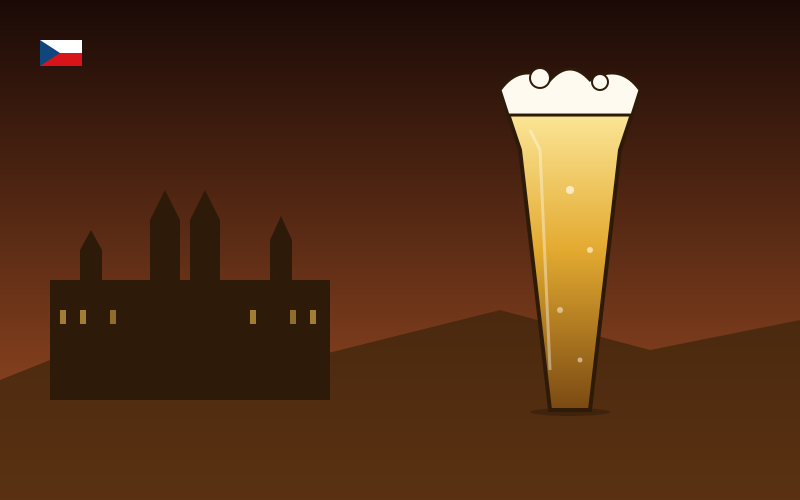
The Czechs drink more beer per person than any nation on earth. Plzeň gave the world the pale lager in 1842, and Prague's pubs still pour foamy "tankové pivo" served unfiltered, unpasteurised and directly from copper tanks.
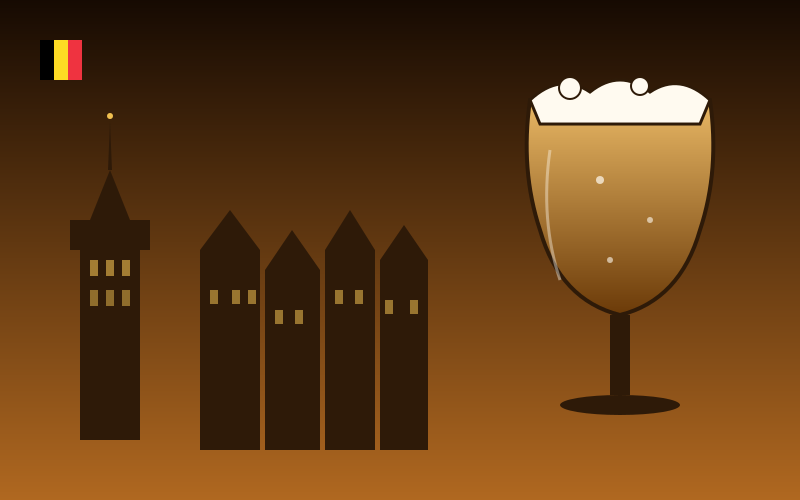
The world capital of beer diversity. Belgium counts more than 1,500 active beers — lambics, gueuze, Trappist ales, witbiers, saisons — recognised by UNESCO as Intangible Cultural Heritage of Humanity since 2016.
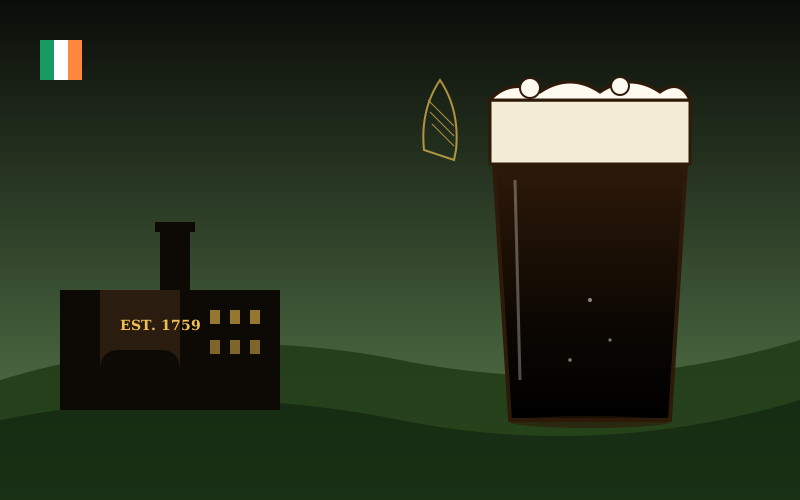
The home of stout. Arthur Guinness signed a 9,000-year lease on St. James's Gate brewery in 1759, and the dark, creamy ale soon became Ireland's most famous export. The brewing complex still anchors the south side of the city.
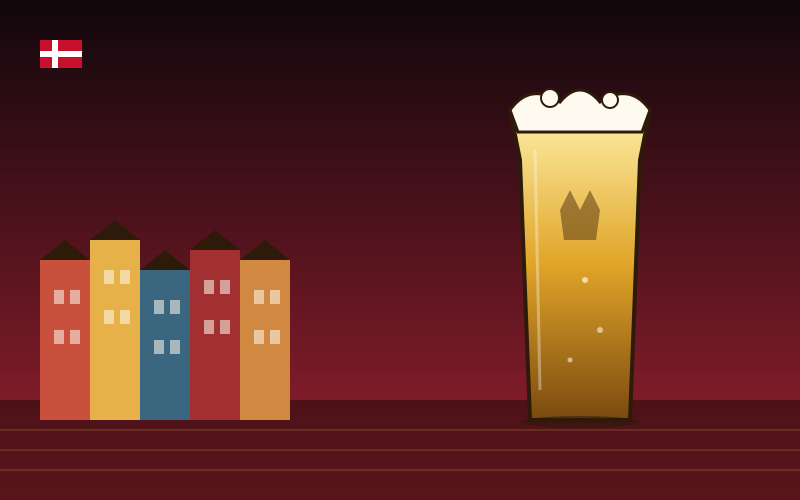
Beneath Copenhagen's cobbled streets lies a brewing legacy: the Carlsberg Laboratory's isolation of pure brewing yeast in 1883 forever changed how lager is made. Today the city is also a hub of Nordic craft brewing.
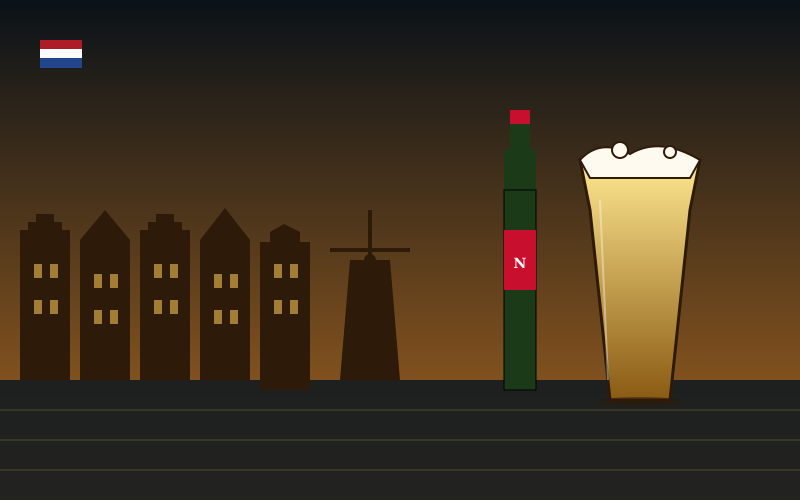
From the canal-side brown cafés (bruine kroegen) to the historic Heineken brewery founded in 1864, Dutch brewing has long balanced craftsmanship and global trade. The Amsterdam beer scene mixes classics with modern micro-breweries.
The birthplace of porter, stout and India Pale Ale. London's traditional pubs and cask-conditioned ales — served at cellar temperature, with gentle natural carbonation — remain a defining feature of British social life.
A small UNESCO-listed town with nine working breweries inside its medieval walls — famous for Rauchbier, a smoked malt beer aged in beechwood-fired kilns and poured from sandstone cellars beneath the Altstadt.
In 1841, Viennese brewer Anton Dreher developed Vienna Lager — an amber, malty style that quietly went on to inspire the Mexican lager and the modern American craft scene. Salzburg's nearby Stiegl brewery has poured since 1492.
Want to visit the heritage in person?
Each of these cities is home to one or more public beer museums or brewery heritage sites — listed with addresses and phone numbers in the directory.
Browse the Museum Directory